Degree in Computer Engineering

About the degree
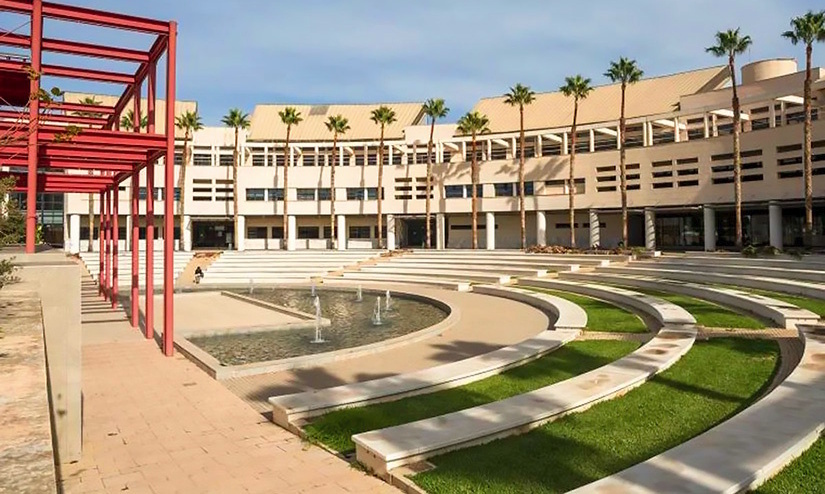
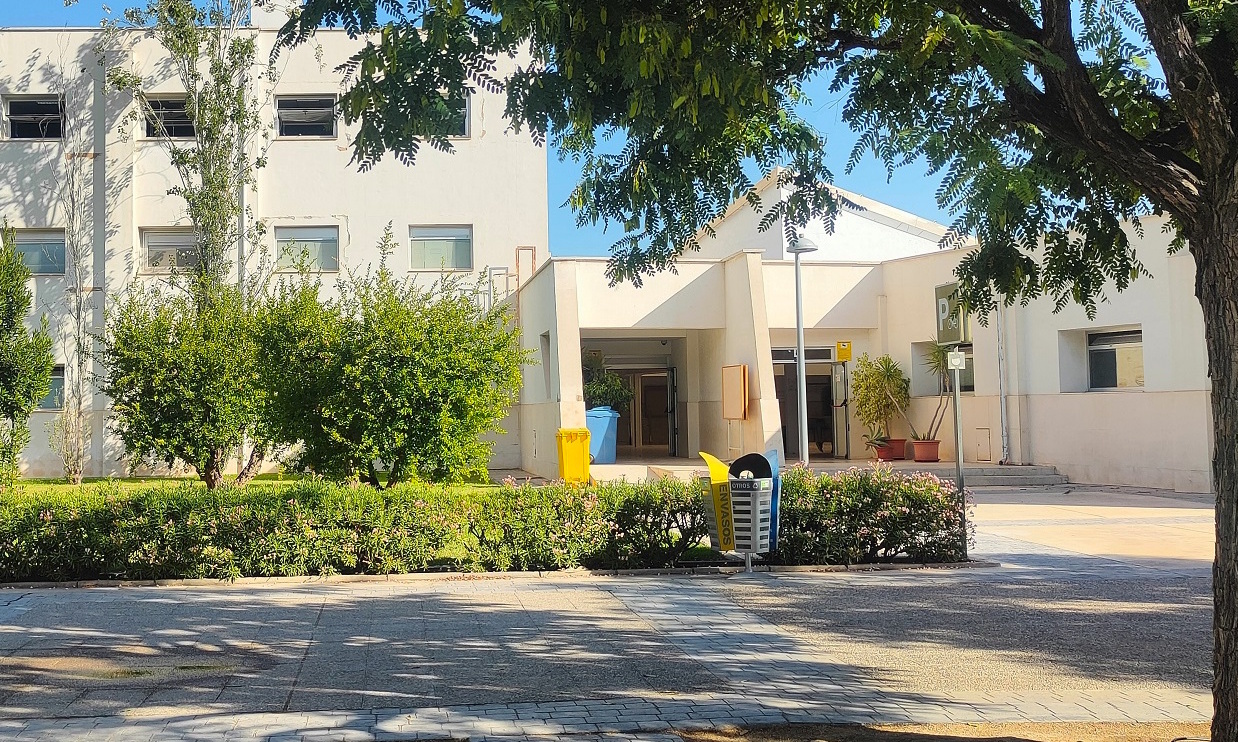
The Computer Engineering Degree of the University of Alicante is one of the biggest degrees of the university, as it provides comprehensive, well-rounded education in everything related to computers and information systems. The 4-year degree is taught in buildings all around the university campus, and is fully on-site.
Most theoretical classes were given in the General Lecture Buildings #2 & #3, while most practical lessons were given in the many Polytechnic University Colleges scattered throughout the campus.
The degree teaches a bit of everything in the first three years, including:
- Mathematics & Theoretical Frameworks of Computation
- Statistics & Data Analysis
- Programming, from low-level Assembly & C++ to high-level Java and Python
- Operating System Configuraton & Programming
- Multithreading & GPU programming (CUDA)
- Software Development & Software Design, including SOLID & other principles
- Algorithm Analysis & Data Structures
- Computer & Hardware Architecture & Design
After the third year, every student gets to choose their specialization, which determines almost all subjects for the fourth year and one for the third. Each one focuses on certain areas of computer engineering:
- Software Engineering: Application development, Web development and Software Design
- Computer Engineering: Embedded & Real-Time Systems, Robotics and Computer Hardware
- Computation: Machine Learning, Data Analysis, Theory of Computation and Data Science
- Information Systems: Business Administration and Process Management
- Information Technology: Computer Networks, Cloud Computing and Cybersecurity
The whole curriculum, including all specializations and subjects, can be seen in the official site for the degree .
My experience
Although some courses were difficult & stressful at times, almost all were extremely fruitful and worthwhile. While I had some computer & programming know-how before, the degree expanded & refined existing skills, while providing lots of new resources and learning opportunities.
I chose to specialize in Computing, which delved deep in Algorithms, Data Structures, Math & Data Analysis; and also introduced Machine Learning, Computer Vision & Compiler Programming. I also took a couple courses on Networking & Cloud Computing from the Computer Networks specialization.
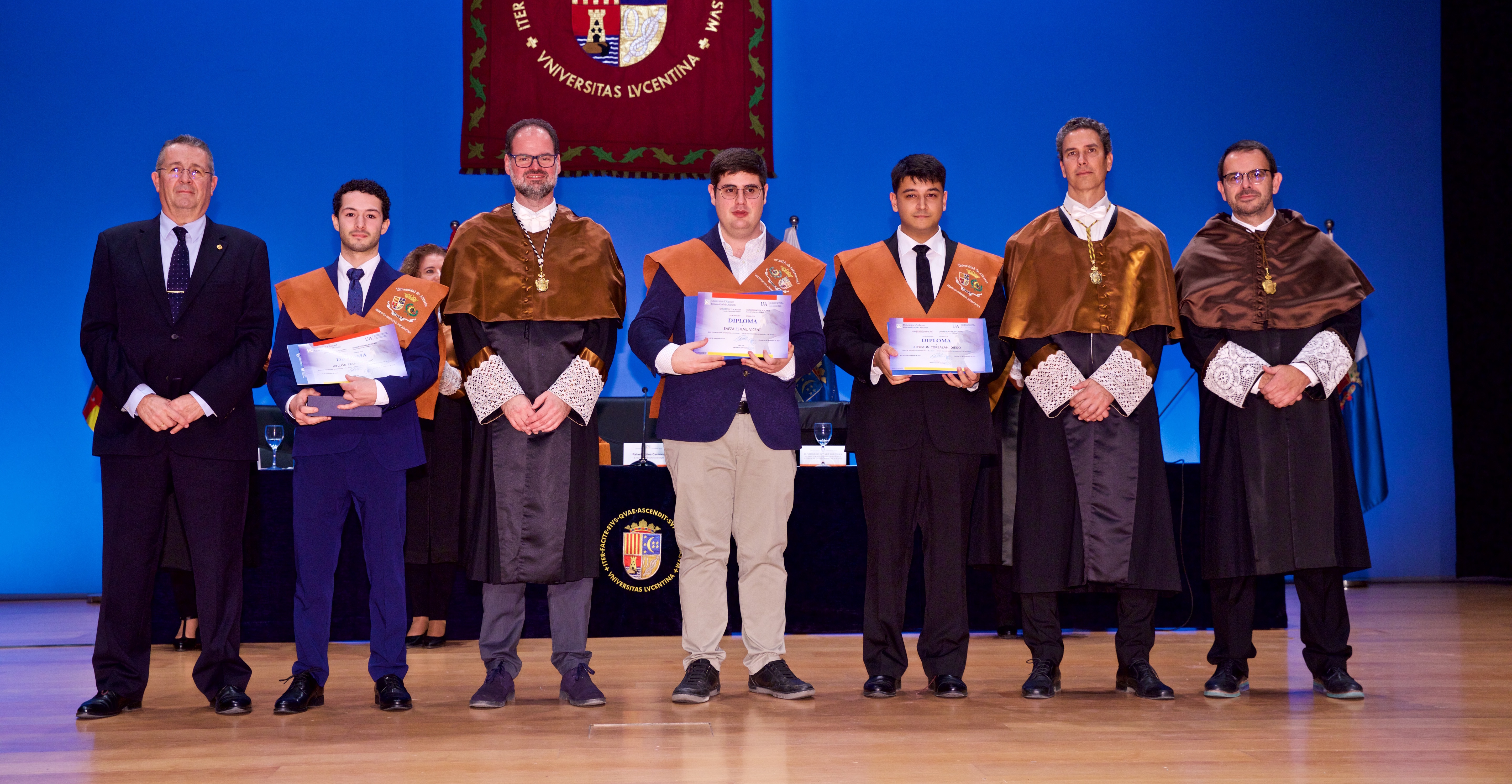
I managed to achieve an average grade of 8.81/10, which was the 2nd highest among the 113 graduates in 2024. Such a feat awarded me the Extraordinary Award in Computer Engineering. I also recieved honors in 13 out of the 38 courses of the degree, which (to my knowledge) was the hightest number out of anyone that graduated in 2024.
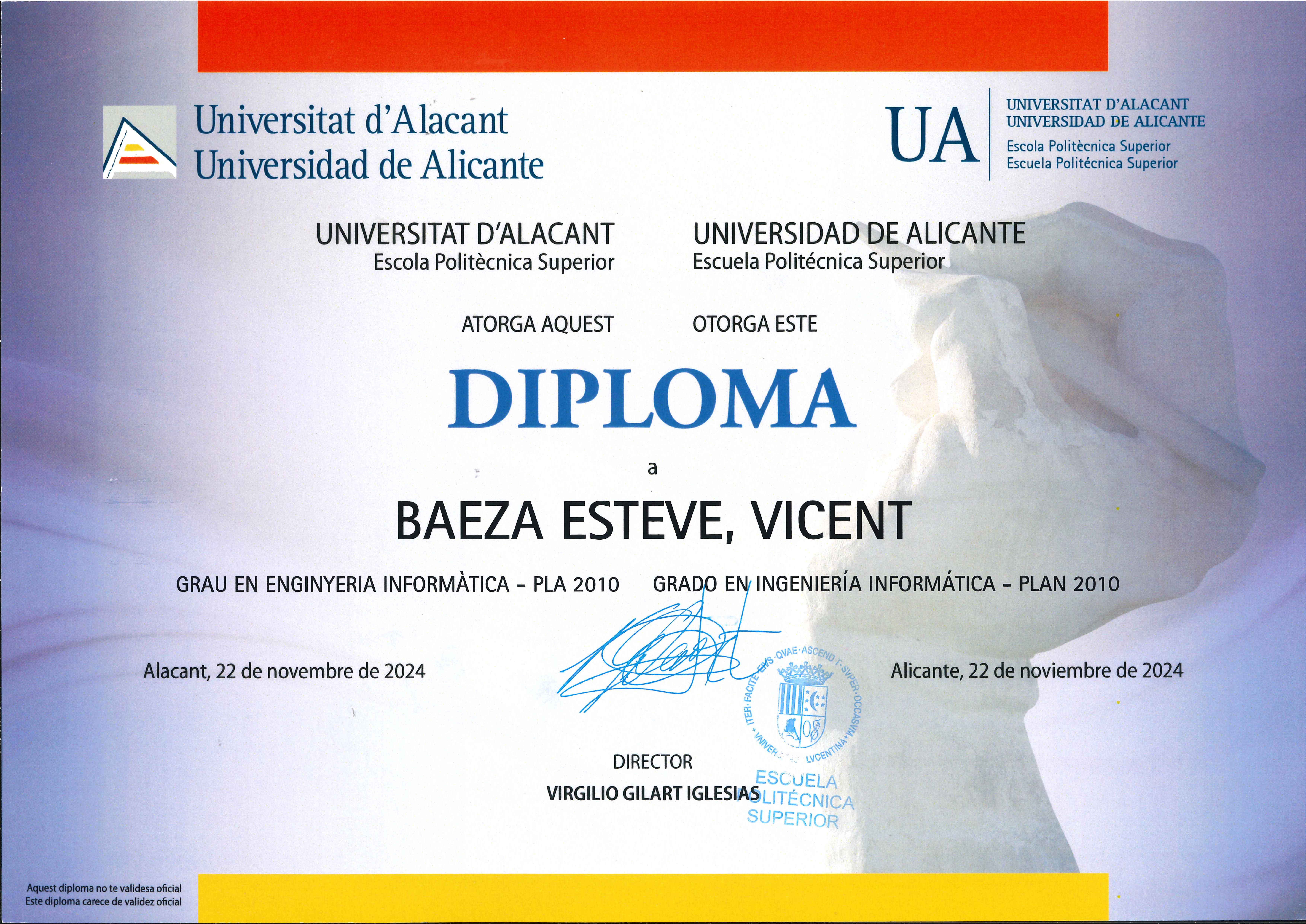
Digital scan of the certificate (in Spanish).
English translation:
University of Alicante
Polytechnic School
AWARDS THIS
DIPLOMA
to
Baeza Esteve, Vicent
Degree in Computer Engineering — 2010 Plan
Alicante, 22nd of November 2024
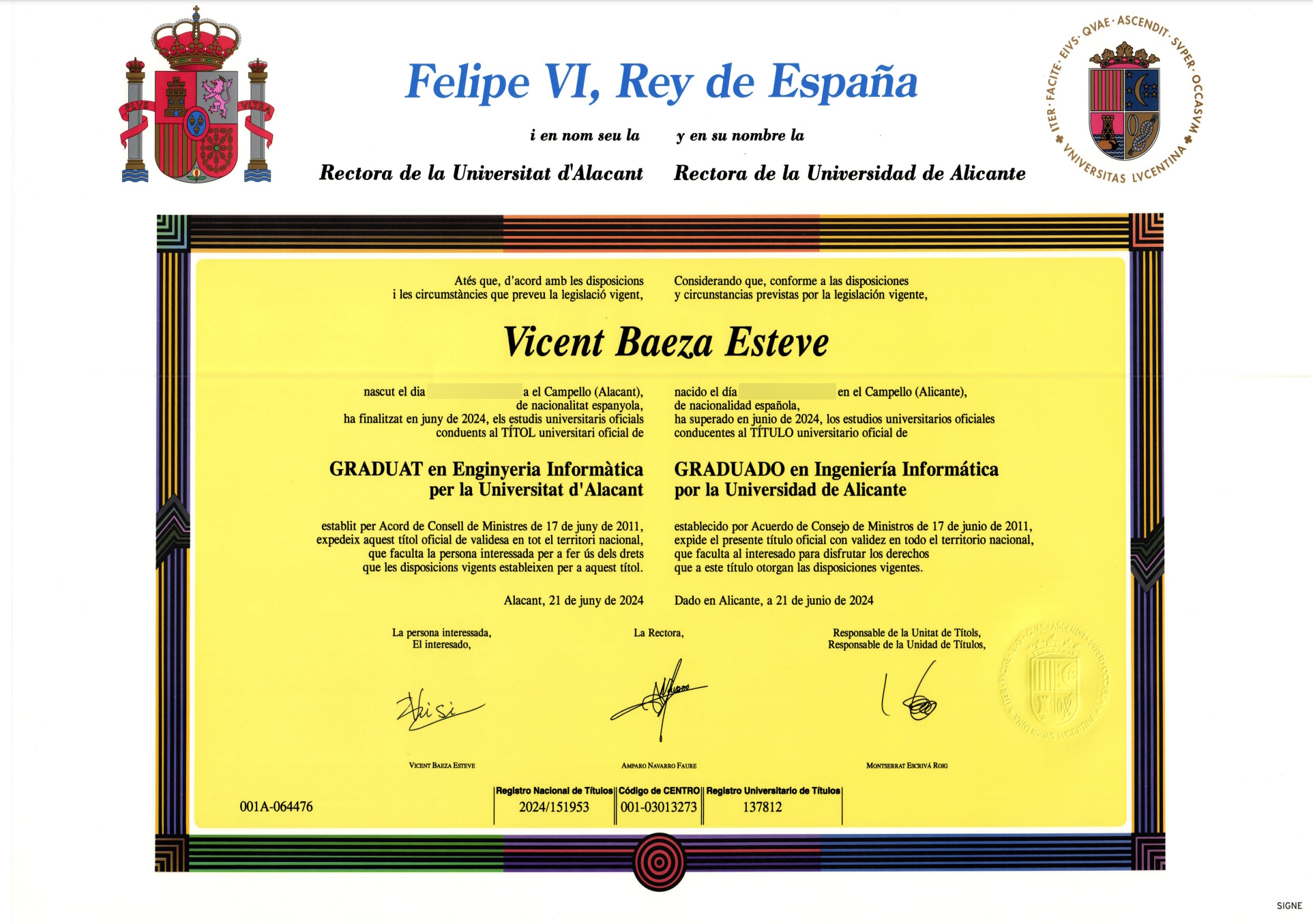
Digital scan of the certificate (in Spanish).
Some personal details have been redacted.
English translation:
Philip the VI, King of Spain
and in his name the
President of the University of Alicante
In accordance with the provisions and circumstances provided for by the current legislation
Vicent Baeza Esteve
Born on [...] in El Campello (Alicante)
of Spanish nationality
has finished in June 2024, the official university studies
conducent to the official university TITLE of
GRADUATE in Computer Engineering by the University of Alicante
pursuant to the Council of Ministers Agreement of the 17th of June 2011,
this official certificate is issued with validity whithin the whole national territory
which entitles the recipient to enjoy the rights
that this certificate grants in accordance to current provisions
Given in Alicante, 21st of June, 2024
Final Project
The Computer Engineering Degree, like many other university degrees, requires a lengthy final project as part of its graduation requirements.
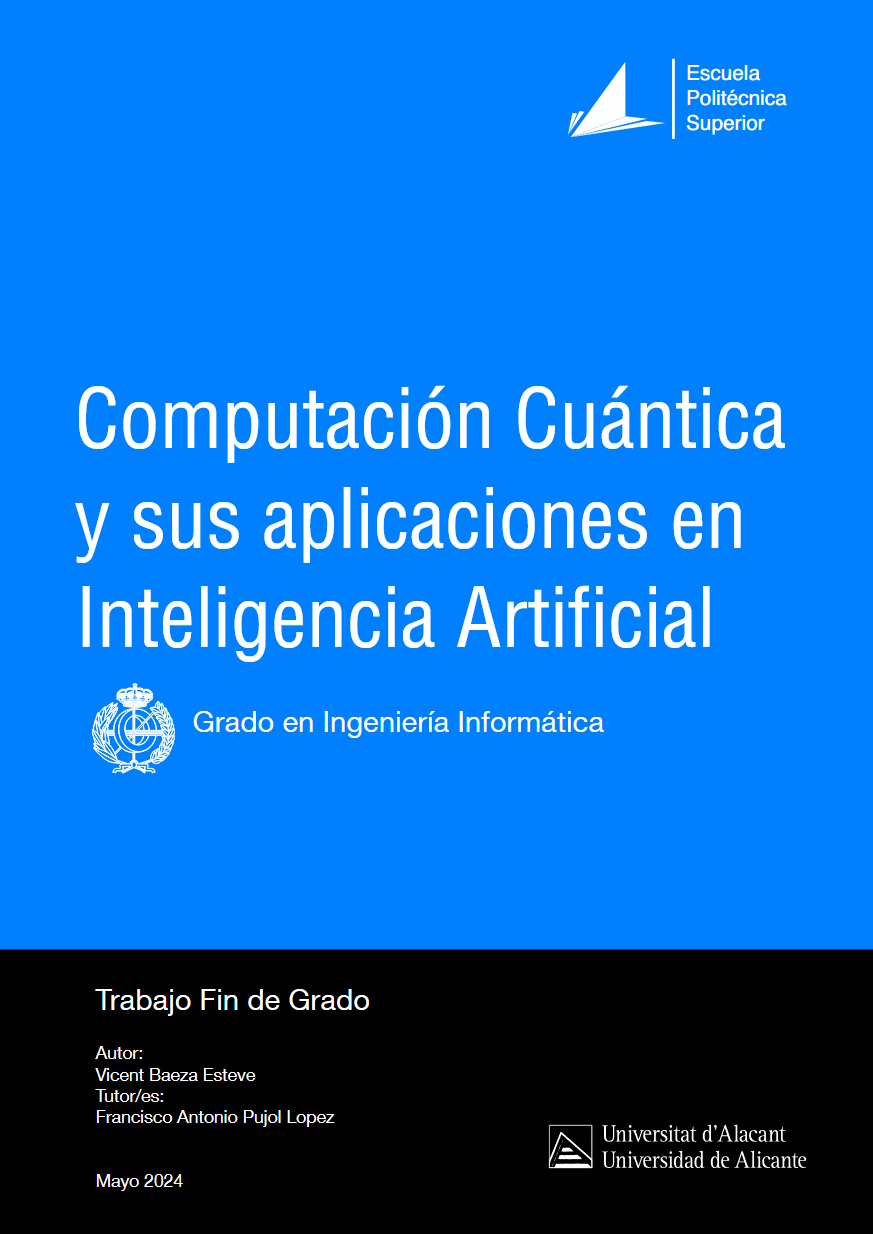
My final project, titled "Quantum Computing and its applications in Artificial Intelligence", was an exploratory project centered in the possible applications of Quantum Computing for speeding up and enhancing Machine Learning systems.
The complete report (in Spanish) can be seen below: